
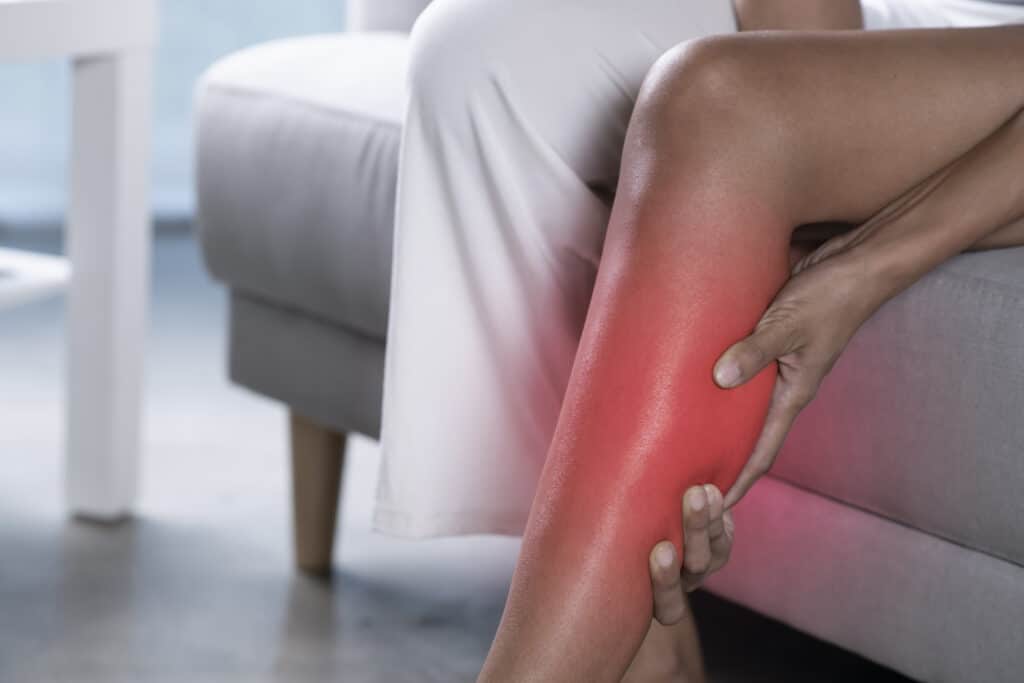
At a glance:
- Cramping pain in the calf/thigh/buttock that starts with walking and improves with rest can be a sign of PAD (poor circulation).
- People sometimes call this “peripheral vascular disease (PVD)”—PAD specifically involves arteries.
- Other causes exist (back/nerve issues, arthritis), so evaluation matters.
- Urgent symptoms include rest pain, non‑healing wounds, sudden cold/pale/blue foot, or rapidly worsening pain.
What this pattern can mean
When leg muscles don’t get enough oxygen-rich blood during activity, you may feel cramping, tightness, or fatigue with walking that improves with rest. This pattern is often called claudication and can be associated with peripheral artery disease (PAD).
Common causes of leg pain with walking
Several conditions can cause leg pain. A circulation-focused evaluation helps distinguish between possibilities such as:
- PAD / poor circulation (artery narrowing or blockage)
- Nerve/spine issues (for example, spinal stenosis)
- Joint/muscle problems (arthritis, tendon issues)
- Other causes that require evaluation
Quick self-check
These features make a circulation evaluation more important:
- Pain starts after a predictable walking distance and improves with rest
- Calf pain is more prominent than joint pain
- Foot feels colder than the other side or you notice color changes
- You have diabetes, smoking history, high cholesterol, or known vascular disease
- You have a non-healing sore/wound on the foot or leg
Red flags: seek urgent care
Seek urgent evaluation if you have:
- Pain at rest (especially at night), new numbness, or rapidly worsening symptoms
- Non-healing foot/leg wound or blackened skin/toes
- Sudden severe pain with a cold/pale/blue foot
- Chest pain or shortness of breath (call 911)
How we evaluate poor circulation (PAD) at MINT
We review symptoms and risk factors, perform a focused exam, and use appropriate non-invasive testing and imaging to evaluate circulation.
If PAD is confirmed, we discuss lifestyle and medical optimization and, when appropriate, minimally invasive treatment options tailored to your goals.
Next step
If you suspect poor circulation, getting evaluated early can help reduce risk and improve walking comfort and long-term leg health.
Medical information on this page is for general education and is not a substitute for personalized medical advice. If you believe you have an emergency, call 911.
FAQs
What is PAD?
Peripheral artery disease is narrowing/blockage of arteries that reduces blood flow to the legs.
Is PAD the same as PVD?
People sometimes use PVD broadly. PAD specifically refers to artery disease affecting circulation.
What tests diagnose PAD?
Evaluation may include non-invasive circulation testing and imaging. Your provider will recommend what fits your situation.
Can PAD cause wounds?
Yes. Reduced blood flow can contribute to slow-healing wounds, especially in people with diabetes.
What treatments are available?
Treatment can include risk-factor management and, for selected patients, minimally invasive procedures to improve blood flow.