
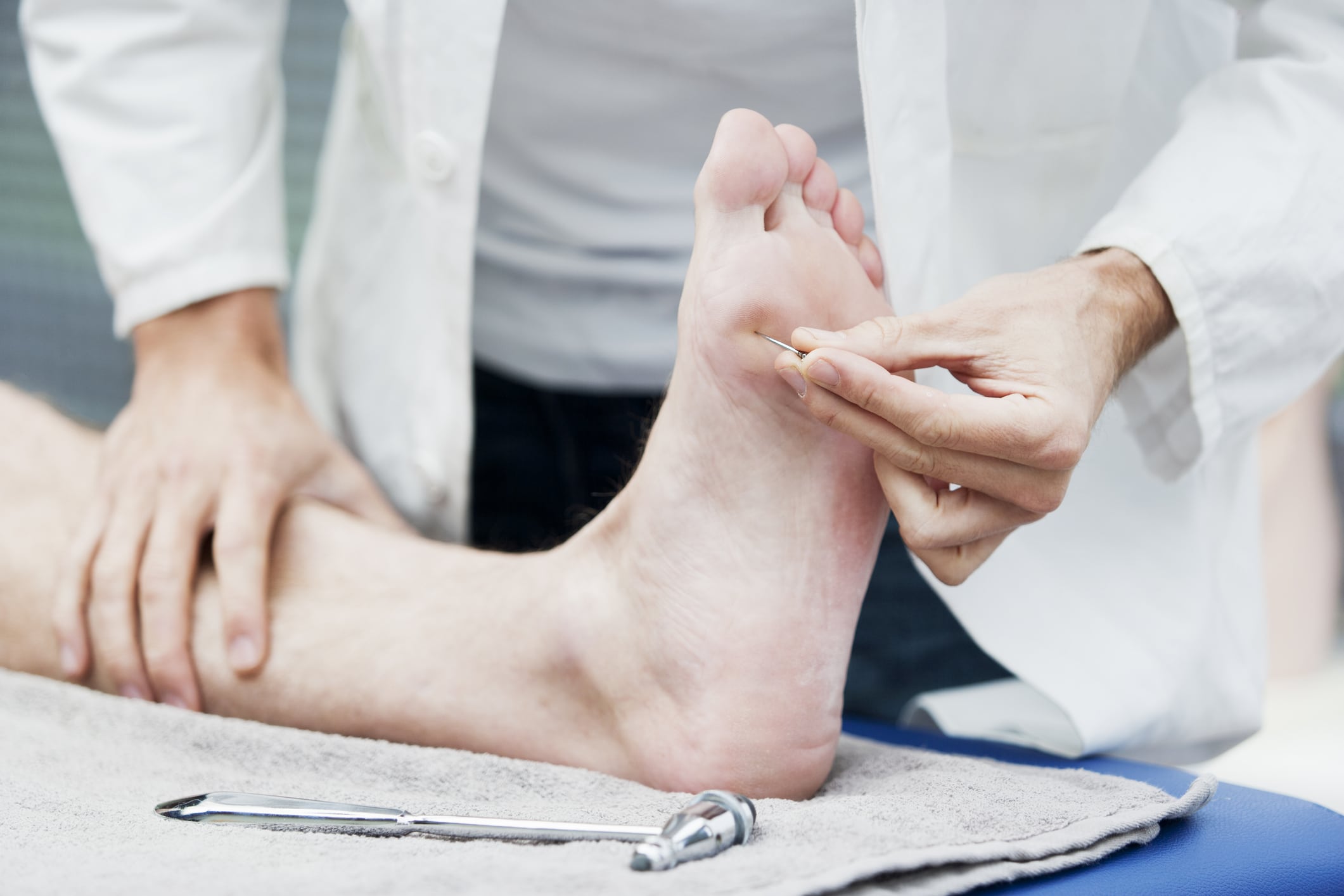
If you have diabetes and you’re feeling numbness, tingling, burning, or ‘pins and needles’ in your feet, you’re not alone. These symptoms are commonly caused by diabetic neuropathy (diabetic nerve damage).
Because diabetes can also affect blood flow to the legs and feet (peripheral artery disease, or PAD), we take a whole-picture approach: we look at nerve-related symptoms and also assess whether circulation may be contributing—especially when symptoms are worsening or you have wounds.
At a glance:
- Diabetic neuropathy can cause burning, tingling, numbness, reduced sensation, and pain in the feet or legs.
- Loss of sensation increases the risk of unnoticed injuries and non-healing ulcers.
- Diabetes can also cause poor circulation (PAD)—which can feel similar and can affect healing.
- Seek urgent care for sudden severe symptoms, a suddenly cold/pale/blue foot, rapidly worsening pain, or a spreading infected wound.
Common symptoms of diabetic neuropathy
Symptoms can be mild at first and become more noticeable over time. Some people feel pain, while others mainly notice numbness or reduced sensation.
- Burning or stabbing pain (often worse at night)
- Tingling, ‘pins and needles’, or electrical sensations
- Numbness or reduced ability to feel temperature
- Sensitivity to touch (even bedsheets can hurt)
- Balance problems or feeling unsteady
Why evaluation matters (neuropathy vs poor circulation)
Nerve symptoms and circulation symptoms can overlap. For example, burning or numbness may be neuropathy, while cramping with walking or rest pain may suggest circulation issues.
If poor circulation is present, treating blood flow problems can be important—especially to reduce wound risk and protect long-term foot health.
- If you have leg pain when walking, cold toes, color changes, or a wound that won’t heal, circulation testing may be important.
Red flags: when to seek urgent care
Please seek urgent medical evaluation if you notice any of the following:
- A new or rapidly worsening foot/leg wound (especially with drainage, fever, or spreading redness)
- A suddenly cold, pale, or blue foot/toes
- Sudden severe foot pain, new weakness, or inability to move the foot
- Blackened skin/toes
- Chest pain or shortness of breath (call 911)
How we can help
At MINT, our goal is to identify what’s driving your symptoms and build a plan that may include nerve-pain strategies, circulation evaluation, and coordinated care.
If your symptoms suggest PAD or reduced blood flow, we can evaluate and treat circulation issues when appropriate.
- Step 1: symptom review and focused exam
- Step 2: consider circulation testing when appropriate (especially with wounds/cold toes/claudication)
- Step 3: discuss a personalized plan and next steps
Next step
If you have diabetes and neuropathy-like symptoms, don’t wait until a small problem becomes a foot ulcer. An evaluation can help clarify what’s going on and what options make sense for you.
Medical information is for general education and is not a substitute for personalized medical advice. For emergencies (severe sudden symptoms, chest pain, shortness of breath), call 911.
FAQs
What is diabetic neuropathy?
Diabetic neuropathy is nerve damage caused by diabetes. It often affects the feet and can cause pain, tingling, or numbness.
Can diabetic neuropathy be reversed?
Some nerve symptoms can improve depending on the cause and how early it’s addressed, but many cases require long-term management. Tight blood sugar control and targeted symptom management can help.
How can I tell if it’s neuropathy or poor circulation (PAD)?
Neuropathy often causes burning/tingling/numbness, while PAD commonly causes cramping with walking, cold toes, color change, rest pain, or wounds that don’t heal. Evaluation is the best way to distinguish.
Why is numbness dangerous for diabetics?
Reduced sensation makes it easier to miss injuries or pressure points. That can lead to ulcers, infections, and complications.
What should I do if I have a foot wound?
If you have diabetes and a wound that isn’t healing, seek prompt evaluation. If there’s spreading redness, drainage, fever, or blackened tissue, seek urgent care.