
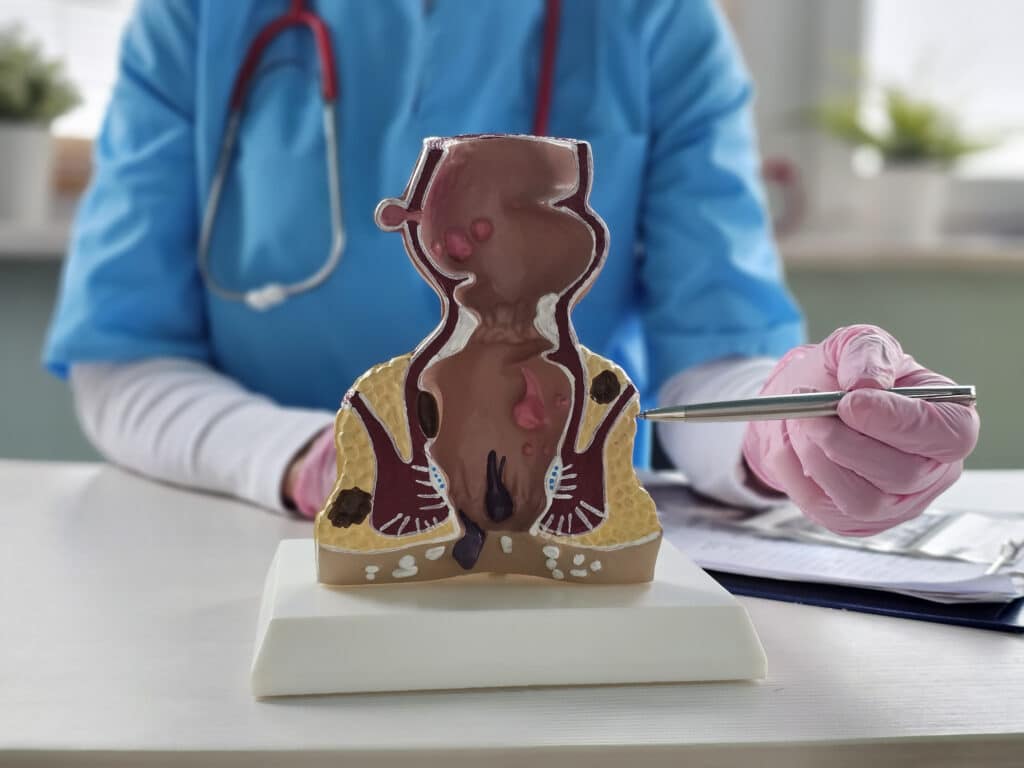
Rectal bleeding, itching, discomfort, or a tender lump can be symptoms of hemorrhoids—but hemorrhoids are not the only possible cause. Because bleeding can sometimes signal other conditions, it’s important to get the right evaluation—especially if symptoms are new, persistent, or worsening.
If you’ve been told you have hemorrhoids and symptoms are recurring or disrupting your life, minimally invasive options may help. For selected patients—especially those with bleeding internal hemorrhoids—Hemorrhoid Artery Embolization (HAE) is a non-surgical, image-guided treatment option.
At a glance:
- Hemorrhoids are swollen veins in the anus/rectum that can cause bleeding, itching, pain, pressure, or prolapse.
- Bleeding can also come from other causes (fissures, inflammation, polyps), so evaluation matters.
- Urgent signs include heavy bleeding, dizziness/fainting, fever, severe worsening pain, or black/tarry stool.
- For selected patients with persistent hemorrhoid bleeding, HAE is a minimally invasive option that may help without traditional surgery.
Common hemorrhoid symptoms
- Bright red blood on toilet paper or in the toilet bowl
- Itching or irritation around the anus
- Pain or discomfort (often worse with bowel movements)
- A tender lump near the anus (may be external hemorrhoid or thrombosed hemorrhoid)
- A hemorrhoid that protrudes during bowel movements (prolapse)
- Mucus discharge or feeling of incomplete evacuation
Important: rectal bleeding can have other causes
While hemorrhoids are a common cause of bright red bleeding, other conditions can cause rectal bleeding and may require different treatment. That’s why persistent bleeding should be evaluated—especially if you are over screening age for colon cancer or have risk factors.
- Anal fissure (tear) — often sharp pain during bowel movements
- Inflammation or infection
- Polyps or other colorectal conditions
- Other causes that need medical evaluation
Red flags: when to seek urgent or emergency care
- Heavy bleeding (soaking through toilet paper repeatedly, large clots, or ongoing bleeding)
- Dizziness, fainting, weakness, shortness of breath, or signs of anemia
- Fever with severe rectal pain or swelling
- Black/tarry stool or maroon-colored stool (seek urgent evaluation)
- Severe sudden pain with a new hard lump (possible thrombosed hemorrhoid—urgent evaluation can help)
What makes hemorrhoids flare up?
- Constipation and straining
- Prolonged sitting on the toilet
- Pregnancy
- Low fiber intake and dehydration
- Heavy lifting
- Chronic diarrhea (less common but possible)
How we evaluate hemorrhoid symptoms at MINT
We start with your symptom history and review prior evaluations. If you’ve already been diagnosed with hemorrhoids (often by primary care, GI, or colorectal), we focus on whether a minimally invasive treatment pathway such as HAE is appropriate based on your symptoms and anatomy.
- Symptom review (bleeding, pain, prolapse, duration, triggers)
- Review of any prior colonoscopy/anoscopy or GI/colorectal evaluations if available
- Discussion of conservative care vs procedural options
- If HAE is appropriate, we review what to expect, typical recovery, and alternatives
Next step: learn about HAE
If hemorrhoid bleeding or discomfort keeps returning despite conservative measures, it may be time to explore a more durable option. Hemorrhoid Artery Embolization (HAE) is designed to reduce blood flow to the hemorrhoids so they shrink over time—without cutting or traditional surgery.
If heavy bleeding, dizziness/fainting, severe pain, fever, or black/tarry stool
seek urgent medical evaluation
Medical information on this page is for general education and is not a substitute for personalized medical advice. If you believe you have an emergency, call 911.
FAQs
How do I know if bleeding is from hemorrhoids?
Hemorrhoids are common, but bleeding can have other causes. If bleeding is new, persistent, or worsening, a medical evaluation helps confirm the source.
Are hemorrhoids dangerous?
Hemorrhoids are usually not dangerous, but they can cause significant discomfort and bleeding. Ongoing bleeding should be evaluated to rule out other conditions.
What is Hemorrhoid Artery Embolization (HAE)?
HAE is a minimally invasive, image-guided procedure that reduces blood flow to hemorrhoids so they shrink over time. It can be an option for selected patients, especially with internal hemorrhoid bleeding.
Is HAE the same as hemorrhoid surgery?
No. Traditional surgery removes hemorrhoid tissue. HAE treats hemorrhoids by targeting their blood supply through a small catheter (no cutting).
What if I have pain but no bleeding?
Pain can come from external hemorrhoids, thrombosis, fissures, or infection. Evaluation helps determine the cause and the right treatment.
When should I go to the ER?
Go to the ER for heavy bleeding, dizziness/fainting, severe pain with fever, or black/tarry stool.