
At a glance:
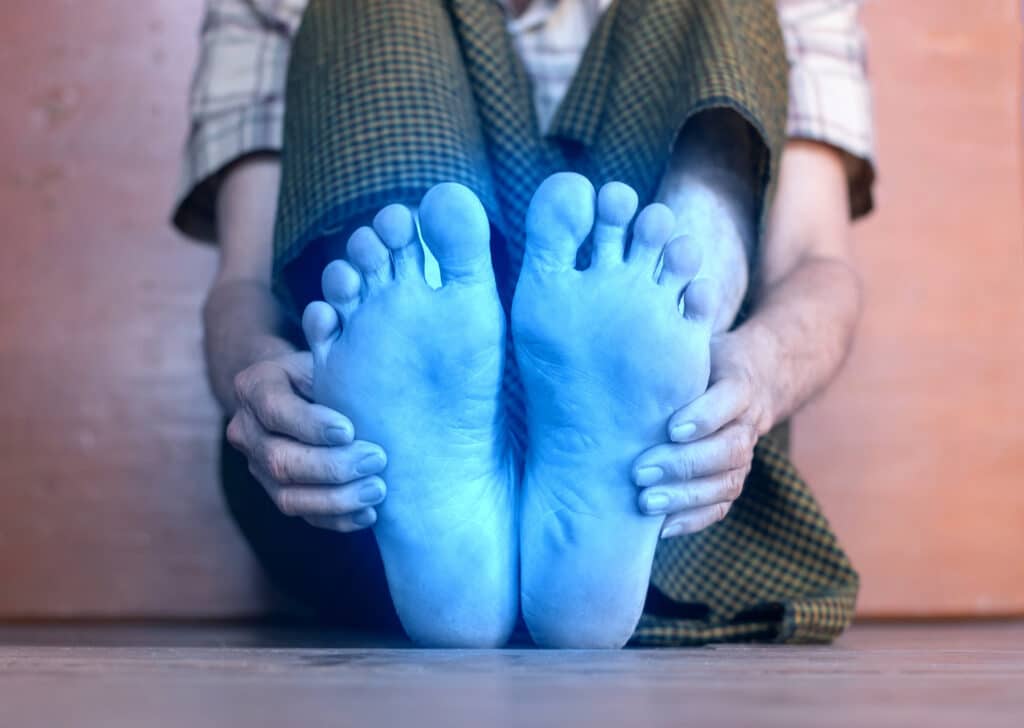
- A cold foot, new color change, severe rest pain, or numbness can sometimes indicate significantly reduced blood flow.
- Some causes require urgent evaluation, especially if symptoms are sudden or worsening.
- If the foot is suddenly cold/pale/blue with severe pain or weakness, call 911.
- If symptoms are ongoing or progressing, request a circulation (PAD) evaluation.
Why this symptom matters
Changes in temperature, color, or pain at rest can happen for multiple reasons, but reduced blood flow is one important possibility—especially in people with diabetes, smoking history, or known vascular disease.
Symptoms that raise concern for reduced blood flow
Only an evaluation can determine the cause, but these patterns warrant prompt attention:
- Pain in the foot or toes at rest (often worse at night)
- New color change (pale, blue, or dark discoloration)
- A foot that feels colder than the other side
- Numbness, weakness, or reduced sensation—especially if new
- Non-healing wound or blackened tissue
Emergency red flags (call 911)
Call 911 or go to the emergency room if you have:
- Sudden severe leg/foot pain with a cold, pale, or blue foot
- New weakness or inability to move the foot
- Rapidly worsening symptoms over minutes/hours
- Chest pain or shortness of breath
What Can Cause a Cold Foot, Rest Pain, or Color Changes?
Coldness, pain, or color changes in the feet and toes can have several possible causes. Reduced arterial blood flow from peripheral artery disease (PAD) is one concern, especially when one foot is noticeably colder than the other, pain occurs at rest, or wounds heal slowly. Nerve problems can also cause sensations of coldness, burning, tingling, or numbness even when the skin does not actually feel cold.
How we evaluate circulation concerns
If symptoms are not an emergency but are persistent or worsening, we evaluate circulation using appropriate testing and imaging.
If PAD or other circulation problems are identified, we discuss a plan that may include medical optimization and, for selected patients, minimally invasive procedures to improve blood flow.
Next step
If you’re worried about circulation, it’s better to be evaluated sooner rather than later—especially if symptoms are progressing.
Medical information on this page is for general education and is not a substitute for personalized medical advice. If you believe you have an emergency, call 911.